


Apparel Liquidation for Bulk Resale Margins
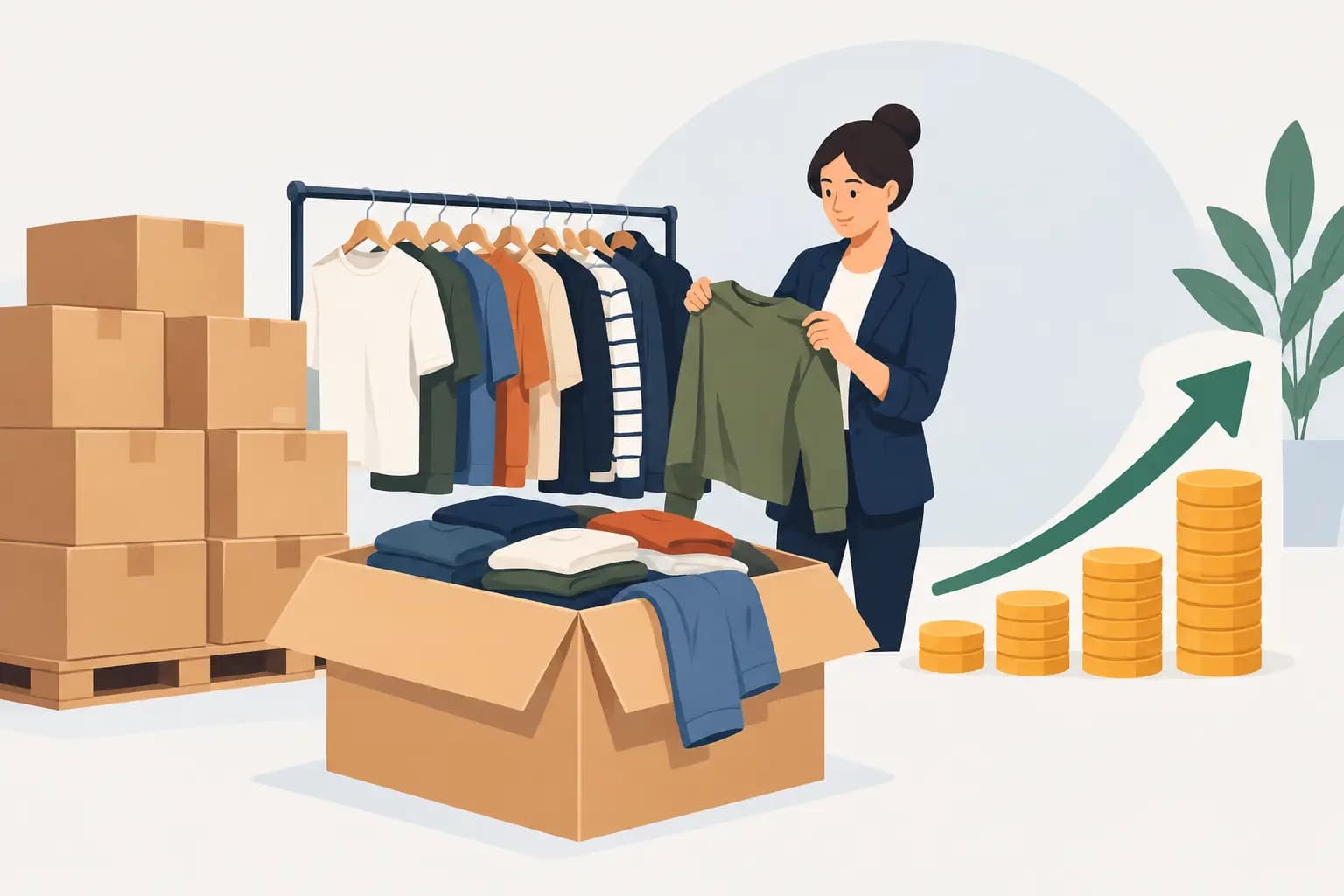
A 12-pallet apparel lot can look like an easy profit on paper: recognizable brands, thousands of units, and a price far below standard wholesale. The real question is whether those units fit your customers, your selling channels, and your cash-flow timeline. Apparel liquidation creates strong buying opportunities, but only for buyers who evaluate the stock beyond the headline discount.
For discount retailers, online sellers, importers, and regional distributors, apparel is one of the fastest-moving liquidation categories. It is also one of the easiest categories to misprice. Sizes, seasons, product condition, brand restrictions, and freight can turn a promising deal into slow inventory if they are not checked before payment.
Apparel Liquidation Is a Margin Decision
Apparel liquidation is the sale of excess, returned, canceled, overstocked, end-of-season, or discontinued clothing in bulk. Inventory may come from manufacturers, retailers, distributors, department stores, e-commerce operations, or brand partners. Lots can range from a few cartons of mixed apparel to full truckloads sorted by category, gender, season, brand, or store origin.
The opportunity is straightforward: buy inventory below normal wholesale cost, then resell it through channels that value price, brand recognition, or assortment. The best lots give you enough room to cover freight, labor, markdowns, marketplace fees, and occasional unsellable units while still leaving a worthwhile margin.
That does not mean the cheapest lot is automatically the best buy. A low per-piece price can hide weak size curves, dated styles, incomplete assortments, damaged packaging, or product that is difficult to sell in your market. A more expensive lot with clear manifests, current styles, and reliable brand demand can produce faster turnover and a better return on capital.
Know What You Are Buying Before You Bid
The term liquidation covers several very different inventory conditions. New overstock is generally the most attractive for retailers because it is unused, often tagged, and easier to merchandise. Shelf pulls may be new but have been handled in stores, with some missing tags, light marks, or damaged hangers. Customer returns can contain a mix of sellable, tried-on, defective, or incomplete items. Salvage stock requires a much deeper discount and a realistic plan for sorting, repair, recycling, or secondary markets.
Ask how the goods were packed and graded. Apparel sold as new with tags has a different resale value from apparel sold as shelf pulls, even when the garments appear similar in photos. Also confirm whether the lot is manifested. A detailed manifest should identify unit count, brands, categories, sizes, colors where available, and estimated retail value. A manifest is not a guarantee of retail sell-through, but it is a practical starting point for valuation.
Season matters just as much as condition. Winter outerwear can be an exceptional buy in spring if you have storage and can sell it when demand returns. It can be a poor buy if you need immediate turnover. Swimwear, school uniforms, holiday apparel, and fashion-driven categories require even tighter timing. The right purchase depends on your market and selling calendar, not just the discount percentage.
Evaluate an Apparel Liquidation Lot Before Price
Before calculating your target offer, request enough information to understand the commercial reality of the lot. Serious wholesale buyers should expect clarity on the stock itself and on the transaction process.
Review these points before committing:
- Total unit count, carton count, pallet count, and estimated shipment weight
- Product condition, grading method, and whether items are tagged, bagged, or on hangers
- Brand list, category breakdown, style range, and available size distribution
- Source market, country of origin, import documentation, and any resale restrictions
- Photos or video of actual inventory, not only catalog images or representative samples
- Manifest accuracy, shortage policy, claim window, payment terms, and loading timeline
Size distribution deserves special attention. A lot dominated by extra-small or extra-large sizes may be difficult to move through a general discount store, while the same lot could work well for a specialist e-commerce seller. Children’s apparel requires age and size data. Footwear should be reviewed by size run and pair matching. Branded fashion should be assessed by style relevance, not just the name on the label.
If the seller cannot provide a complete manifest, that does not automatically end the opportunity. Unmanifested lots can be profitable, especially for buyers with an established off-price channel and a strong sorting operation. But the price must reflect the additional uncertainty, labor, and expected recovery rate. Treat unknown inventory as unknown inventory. Do not value it as clean, fully sorted overstock.
Match the Lot to Your Resale Channel
The same apparel lot can have very different values depending on where it will be sold. A chain of discount stores may benefit from broad mixed assortments that create a treasure-hunt shopping experience. A marketplace seller may need smaller, cleaner assortments with searchable styles, reliable sizing, and branded labels. Export buyers may prioritize lightweight, high-volume basics that can be redistributed through regional wholesalers.
For physical retail, ask whether the lot can fill a department or whether it will create too many isolated racks. A mixed truckload may deliver excellent average cost but still require labor to separate women’s, men’s, children’s, seasonal, and premium products. For online sales, calculate photographing, listing, measuring, storing, picking, packing, returns, and platform fees. Low-cost apparel is not necessarily low-cost to sell online.
There is also a channel-control issue. Some branded goods may be restricted by territory, sales channel, or advertising rules. Verify whether goods can be sold through marketplaces, discount stores, export markets, or your own website before making promotional plans. Clear documentation protects both your investment and your customer relationships.
Build the Landed-Cost Model First
Your purchase price is only one line in the deal. Landed cost is what determines whether the inventory can compete at retail or wholesale.
Start with the stock price, then add loading, domestic transport, ocean or air freight where applicable, insurance, customs duties, brokerage, taxes, warehousing, handling, sorting, repackaging, and expected shrink. Divide the full amount by the number of sellable units, not the total units. If you expect 8 percent of a return lot to be unsellable, account for that before deciding your maximum purchase price.
A practical calculation is simple: total landed cost divided by expected sellable pieces equals your true unit cost. Then compare that cost with your conservative selling price, not the best-case price. If you normally sell branded T-shirts at $8 to $12, build the model around the lower end unless you have proven demand for the higher price.
Speed has value, too. Inventory that turns in 30 days can justify a smaller margin than inventory that may occupy warehouse space for nine months. Buyers often focus on gross margin while overlooking the capital trapped in slow stock. The strongest liquidation purchases balance margin with velocity.
Control Risk With Clear Deal Terms
Liquidation buying relies on trust, but trust works best with clear documentation. Confirm the legal seller, invoice details, payment method, Incoterms where relevant, pickup location, loading responsibility, and estimated dispatch date. If the goods are cross-border, make sure the paperwork supports customs clearance in the destination country.
For larger transactions, consider inspection options, third-party loading checks, or a staged process that begins with a smaller lot. A test purchase can show whether the supplier’s grading, packing, communication, and delivery performance match the offer. This approach is particularly useful when entering a new country, buying from an unfamiliar source, or testing a category outside your core business.
Photos and manifests should be retained with the purchase order. If a claim procedure exists, know the deadline and evidence required. Do not wait until stock has been sorted, redistributed, or mixed with other inventory to inspect it. Check quantity and apparent condition as soon as possible after receipt.
Use Global Sourcing Without Losing Control
International apparel liquidation opens access to larger lots, broader brand assortments, and pricing that may not be available in one domestic market. It also adds freight, currency, customs, and communication variables. The answer is not to avoid global purchasing. It is to buy with a process that makes each variable visible.
Confirm the origin of the goods and whether labels, fiber content, safety requirements, and country-of-origin marking meet the rules of your destination market. For imports into the United States, classification and duty exposure can materially change your unit cost. A supplier that understands cross-border shipping can save time, but the buyer should still verify the commercial documents and import responsibilities.
GLOBAL STOCKS works with buyers who need bulk offers across markets, including branded apparel and mixed retail stock. The most productive conversations start with specifics: your target categories, preferred condition, brands, total budget, destination, required quantities, and resale channel. Clear buying criteria lead to faster, more relevant offers.
Turn Good Stock Into Repeat Business
The first purchase should build knowledge, not just generate sales. Track which brands move fastest, which sizes create markdowns, how accurate the manifest was, what percentage required rework, and how long each category stayed in stock. Those numbers improve the next purchase far more than a generic estimate of retail value.
Create separate performance records for new overstock, shelf pulls, returns, and mixed lots. Over time, you will know the maximum landed cost your operation can support for each type of apparel. That gives you the confidence to move quickly when a strong lot appears and the discipline to walk away when the discount is not deep enough.
The best apparel liquidation buyers are not chasing every cheap load. They know exactly what they can sell, what it costs to move, and what information they need before funds are released. When the inventory, paperwork, and resale channel line up, a bulk apparel deal becomes more than a bargain - it becomes a repeatable source of margin.