


Branded Liquidation vs Unbranded Stock: Which Pays?
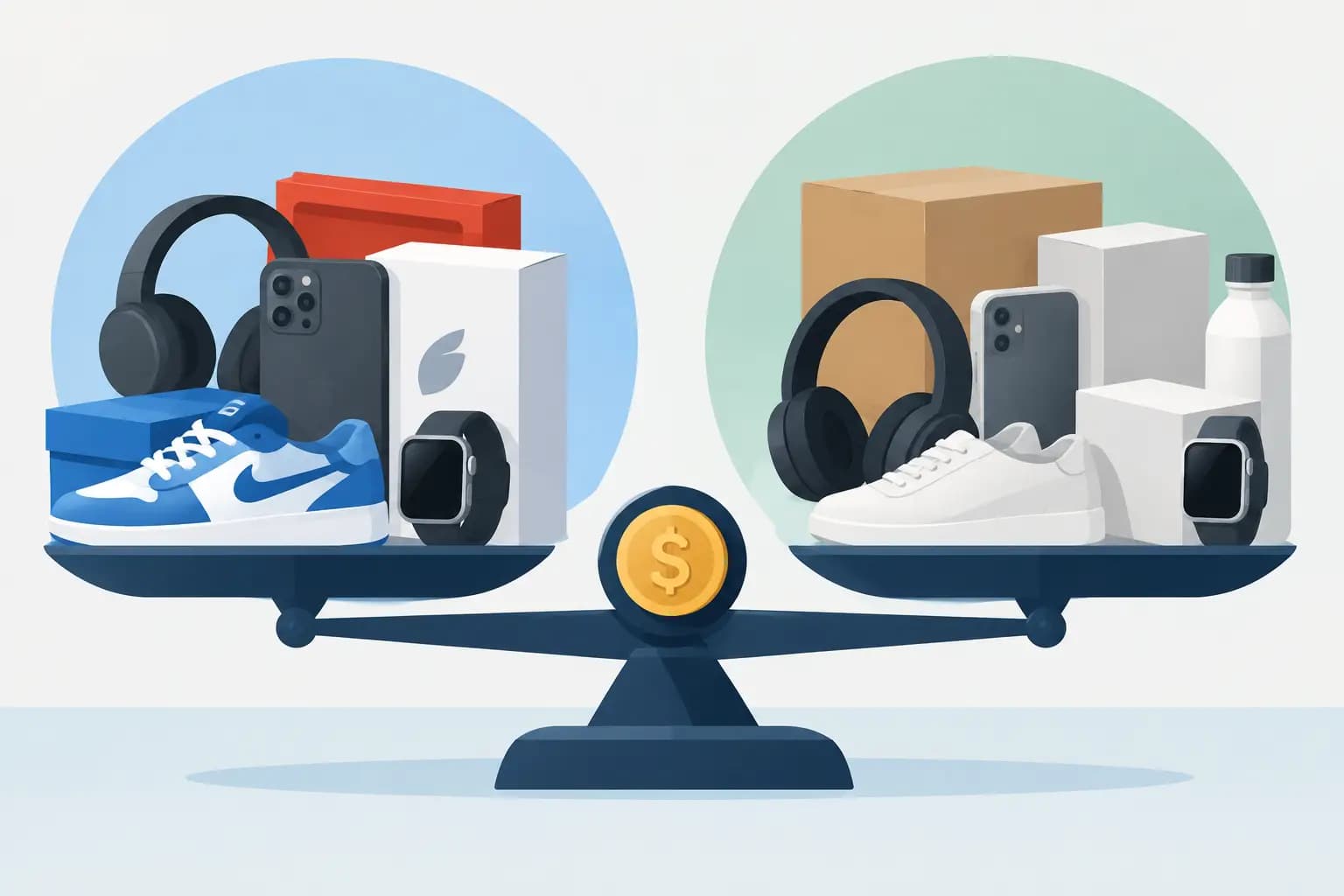
A pallet can look profitable on paper and still become expensive inventory if customers do not recognize it, trust it, or buy it fast enough. The decision between branded liquidation vs unbranded stock is not simply about buying a familiar label or getting the lowest unit cost. It is about choosing the stock that fits your sales channel, available cash, target customer, and speed of turnover.
For a discount chain, online seller, importer, or regional distributor, both options can produce strong returns. The right choice depends on what you can verify before payment and what your market will pay once the goods arrive.
Branded liquidation vs unbranded stock: the commercial difference
Branded liquidation consists of surplus, overstock, canceled orders, shelf pulls, customer returns, end-of-season goods, or closeout inventory from recognized labels. Buyers are paying for more than the product itself. They are buying existing customer awareness, perceived quality, and a shorter path to resale.
Unbranded stock is sold without a recognized retail brand, often as factory surplus, private-label production, generic goods, neutral packaging, or inventory made for a buyer that did not take delivery. It can offer a much lower entry price and greater pricing freedom, but it requires the buyer to create confidence at the point of sale.
Neither is automatically the better deal. A branded apparel lot with mixed sizes, outdated styles, and uncertain condition may move slower than clean, practical unbranded household goods. On the other hand, a known footwear or cookware brand can justify a higher ticket price immediately, even in a value-focused store.
When branded liquidation earns its higher cost
Brand recognition reduces friction. Customers who already know a label are more likely to click, pick up, or purchase the item without a long product explanation. That matters most for e-commerce sellers competing for attention, discount retailers trying to drive foot traffic, and distributors supplying stores that want recognizable names on the shelf.
A strong brand can support higher resale pricing, improve conversion rates, and create marketing value. “Known-brand closeout” is an easy offer to communicate. It gives buyers a clear reference point between the original retail price and the current discount price.
Branded liquidation is especially attractive in apparel, footwear, sportswear, beauty, cookware, toys, tools, and consumer electronics. In these categories, shoppers often associate the brand with fit, performance, warranty expectations, or status. A recognizable logo can make the difference between a fast sell-through and a product that needs deep markdowns.
However, a brand name should never replace due diligence. Ask for clear information on stock origin, item condition, quantity by SKU, size and color distribution, packaging, and the reason for liquidation. A famous brand does not protect a buyer from poor assortment quality, missing accessories, damaged packaging, or a product mix that does not suit the destination market.
There are also resale restrictions to consider. Some branded goods may have territory limitations, channel restrictions, minimum advertised pricing rules, trademark concerns, or documentation requirements. For cross-border transactions, confirm that the goods can be legally sold in your intended market before you build your margin plan around them.
Where unbranded stock creates the bigger opportunity
Unbranded stock wins when product utility matters more than logo recognition. Everyday household goods, basic tools, storage products, kitchen accessories, seasonal items, workwear basics, party supplies, and many industrial products can sell well without a major brand behind them.
The main advantage is cost. Lower acquisition prices give buyers room to set aggressive retail prices, supply independent stores at workable wholesale margins, or test new markets without putting too much cash into one shipment. If you operate a discount store, market stall network, dollar-format business, export operation, or online value channel, this flexibility can be valuable.
Unbranded goods can also be easier to position under your own private label. You can create packaging, bundle related items, use neutral product photography, and build an offer around function rather than a previous retail identity. That gives you more control, but it also places more responsibility on your business. You must be confident in the product quality, compliance, labeling, and customer presentation.
The risk is that a cheap product can be difficult to sell if it looks generic, has unclear specifications, or competes against hundreds of similar listings. With unbranded inventory, samples and inspection matter even more. Check materials, dimensions, finishes, instructions, safety marks, packaging strength, and consistency across the lot. A low unit cost is irrelevant if returns, complaints, or slow-moving stock consume your margin.
Compare the margin, not just the purchase price
Buyers often make the mistake of comparing branded and unbranded stock by invoice price alone. The better comparison is landed cost against realistic net recovery.
Start with the product price, then add freight, insurance, duties, taxes, customs handling, warehouse labor, repacking, marketplace fees, local delivery, and an allowance for damaged or unsellable units. If the lot is mixed, calculate at SKU level where possible. A pallet average can hide a small group of high-value items behind a large volume of weak sellers.
Then estimate the real selling price, not the optimistic one. Branded goods may sell at a higher price, but perhaps only after product authentication, better photography, individual listing, or more careful fulfillment. Unbranded goods may sell at lower ticket values but move in volume through simple merchandising and multipacks.
A useful purchasing question is: how many units must sell, at what price, and within what time frame for this lot to meet the required return? If the answer relies on perfect sell-through, the deal is too tight. Build in room for markdowns, defects, and slower lines.
Match the inventory to your selling channel
Your channel should guide the decision. Branded liquidation is often a strong fit for online marketplaces, outlet stores, off-price retailers, boutique buyers, and promotional campaigns where recognizable names create demand quickly. It can also help new sellers build trust when they do not yet have a private-label reputation.
Unbranded stock often fits discount retail, wholesalers serving small shops, B2B supply, export markets, convenience channels, and bundle-based e-commerce. In these channels, price, availability, and practical value may matter more than label recognition.
Consider how much effort your operation can put into selling the goods. A mixed branded lot may require detailed SKU management, sizing work, condition grading, and individual listings. A uniform unbranded shipment may be easier to receive, price, and distribute at scale. The more operational complexity a lot creates, the more margin it must deliver.
Questions to ask before committing to a lot
Before you confirm either type of inventory, get specific answers. Request the packing list, total units, product categories, SKU count, country of origin, available photos, pallet or container volume, condition grade, and pricing basis. For branded goods, ask for proof of origin and clarification of resale rights. For unbranded goods, ask for samples, compliance documents where relevant, and full product specifications.
Also confirm whether quantities are exact or estimated, whether substitutions are possible, and who handles export paperwork, freight coordination, and customs documentation. International liquidation buying moves fast, but speed should not mean accepting unclear terms.
GLOBAL STOCKS works with buyers who need fresh international offers, clear lot details, and practical support for cross-border purchasing. The most productive partnerships start with a defined buying brief: category, target price, acceptable condition, preferred origin, minimum quantity, and destination market.
Buy the stock you can turn, not the stock that looks cheapest
Branded liquidation is usually the stronger choice when recognition drives purchase decisions and you can verify the goods, restrictions, and condition. Unbranded stock can produce excellent returns when the product is useful, the quality is consistent, and your sales channel rewards value over labels.
The best buyers do not chase a logo or a low price in isolation. They buy inventory with a clear exit route. Set your target margin, confirm the paperwork, inspect the assortment, and choose the lot your customers are ready to buy now.